By: Genyukan Dojo | Last updated: November 26, 2026 | Reading time: about 8 minutes
Before a first iaido class, many people go looking for equipment and meet three unfamiliar words: bokken, iaito and shinken. Online shops sell all three, forums argue about each one, and it is easy to conclude that you must buy something right away. Usually you do not.
This guide explains the iaito vs bokken question in plain terms. It covers what each sword is, how both differ from a live blade, why beginners often start with a wooden or blunt sword, and what to ask your instructor before you spend money. It describes iaido in general. Where practice at Genyukan Dojo in Rego Park, Queens matters, we say so, and we flag what to confirm with the dojo.
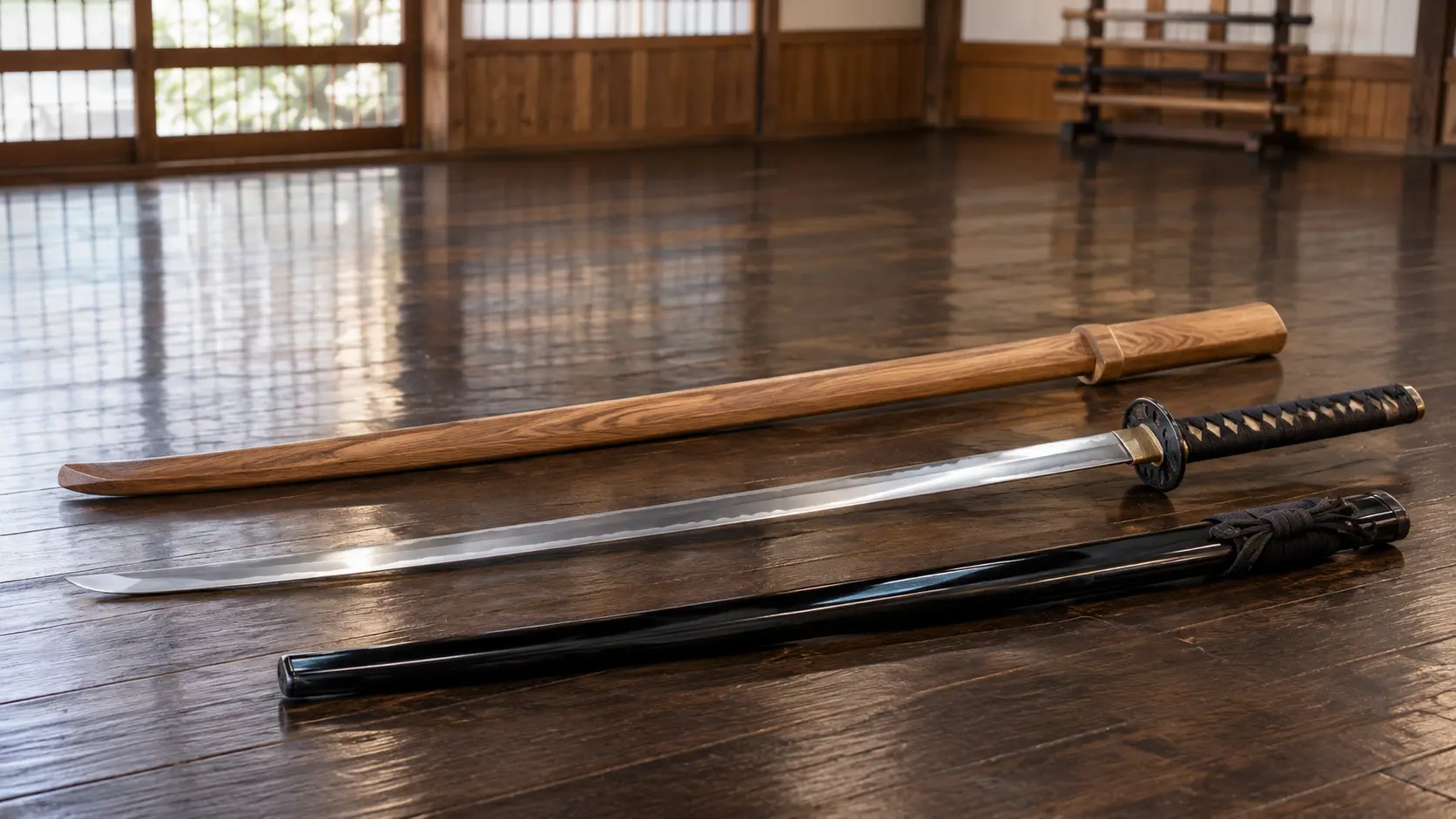
Quick answer: A bokken is a wooden practice sword, an iaito is a blunt metal replica used for iaido forms, and a shinken is a sharpened live blade. Beginners usually start with a bokken or iaito, depending on the dojo. Do not buy any sword before your instructor tells you what they approve.
Key takeaways
- A bokken is wooden. An iaito is a blunt-edged metal practice sword that most iaido practitioners use. A shinken is a sharpened blade used by only a few, more experienced practitioners.
- Which one a beginner starts with depends on the instructor and school, not on a universal rule.
- Do not buy a sword before your instructor says what is approved. Type, length and balance all matter.
- Iaido is mostly solo forms, but some schools also practice two-person forms with bokken. Genyukan’s Ryushin Shouchi Ryu includes two-person bokken training.
- Safety comes from supervision and controlled practice, not from the sword type alone.
What is the difference between an iaito and a bokken?
All three tools show up around iaido, the Japanese art of drawing the sword, cutting, and returning it to the scabbard. Here is what each one is.
Bokken: the wooden sword
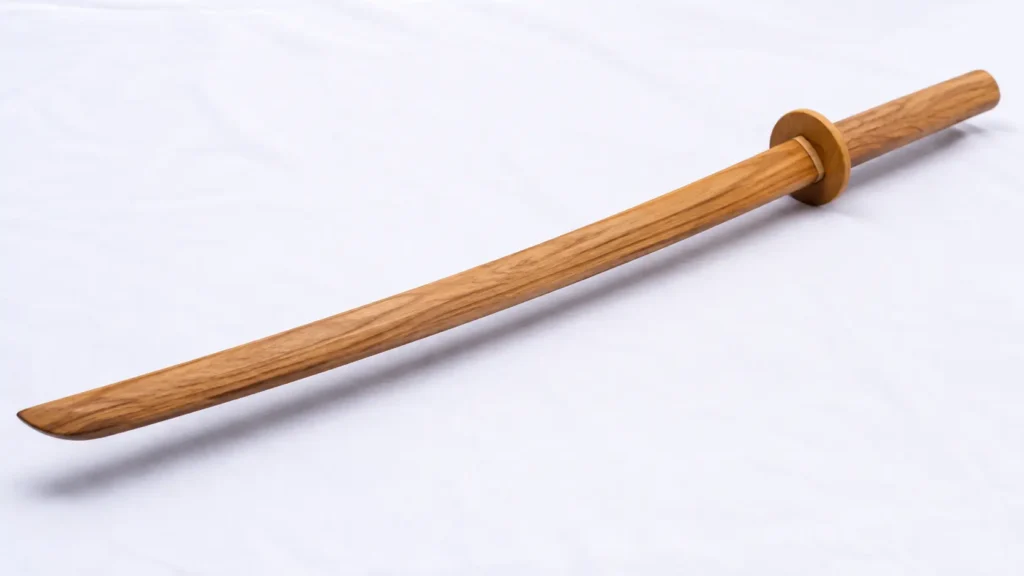
A bokken is a wooden practice sword. Some schools have beginners start with one. It is also commonly used for partner practice: for safety, multi-person forms in iaido are usually done with a bokken. The Ryushin Shouchi Ryu taught at Genyukan includes iai kumitachi, two-person bokken training, alongside its solo forms.
Iaito: the blunt metal sword
An iaito is a practice sword built like a real one, with a blade, handle and scabbard, but with a blunt edge. It is typically made of a zinc or aluminum-zinc alloy. According to Wikipedia’s iaido entry, most practitioners use an iaito (also called a mogito).
Shinken: the live blade
A shinken is a fully sharpened sword. The same source notes that only a few, more experienced practitioners use one. It is not a beginner’s tool.
Iaito vs bokken: which should a beginner start with?
There is no single answer. A beginner may start with a wooden sword depending on the instructor’s teaching style, and many schools move students to an iaito. Some teachers hand over an iaito straight away. Because schools differ, the dependable answer is to ask the instructor of the school you plan to join.
Why many dojos begin with a wooden or blunt sword
Starting with the safest tool lets an instructor concentrate on posture, grip and movement first. It also protects you while the draw and the return to the scabbard are still unfamiliar. This is general reasoning, not a rule from any one school.
What else affects the choice?
- The school and its style. Equipment expectations differ between iaido schools.
- Your instructor’s approval. This is the deciding factor, not a retailer’s “beginner” label.
- Fit. Retail buying guides stress that length, weight and balance matter, and that a sword that is too long can lead to bad habits or injury. These guides are written by sellers, so treat them as general context and rely on your instructor’s sizing advice.
- Cost. Prices vary widely and change often, so check directly instead of relying on an old listing.
- Care and storage. Any practice sword needs proper care and a safe place to be kept.
Blunt does not mean harmless
An iaito’s cutting edge is not sharpened, but practitioners commonly note that the tip can still be pointed, so careless re-sheathing can cause injury. This is why supervision matters whichever sword you use. [VERIFY BEFORE PUBLISHING: Sensei to confirm or reword this safety note]
Three scenarios (illustrative, not real students)
- The curious beginner. A new student reads equipment reviews online, then asks at the first class what to bring. The instructor says to wait. Result: no money spent, and the right tool chosen later with guidance.
- The early buyer. A new student orders a sword online before class, and the instructor says it does not fit the school’s needs. Result: a wasted purchase and some awkwardness.
- The borrower. A dojo lends a practice sword for the first weeks. The student learns what feels right before choosing a personal one.
[Add a real, Sensei-approved example of equipment guidance given to new students at Genyukan]
Iaito vs bokken vs shinken at a glance
| Bokken | Iaito | Shinken | |
|---|---|---|---|
| Material | Wood | Typically zinc or aluminum-zinc alloy | Steel blade |
| Edge | Not sharp | Blunt (unsharpened) | Sharpened |
| Typical use | Starting out in some schools; partner practice | Most iaido practice | A few, more experienced practitioners |
| Beginner choice? | Sometimes, by instructor | Sometimes, by instructor | No |
| Buy before your first class? | No. Ask first. | No. Ask first. | No |
Checklist: before you buy any sword
- Ask which type your instructor approves for beginners.
- Ask whether the dojo lends equipment at first.
- Ask for sizing guidance (length and weight).
- Ask about care and safe storage.
- Ask how to carry equipment to and from class.
- Wait until you are sure you will continue.
Common mistakes and misconceptions
- Buying a sharp sword first. A shinken is not a beginner’s tool.
- Buying by looks or price. Display and collectible swords are not practice swords.
- Ignoring fit. A sword that does not suit your body can build bad habits.
- Practicing alone from videos. Without feedback, errors can become habits, and handling a sword unsupervised is a safety risk.
- Assuming an iaito is a toy. It is still a serious tool.
- Thinking you need a sword for the first class. Many dojos begin newcomers with borrowed or wooden equipment. Ask.
What the sources say
- Wikipedia’s iaido entry says beginners may start with a bokken depending on the instructor, most practitioners use a blunt iaito, and only a few experienced practitioners use a shinken. It also says iaido is mostly solo kata with no sparring, and multi-person kata usually use bokken for safety.
- Genyukan’s own Iaido page describes Ryushin Shouchi Ryu as composed of over 60 solo kata plus two-person bokken training.
- Retail guides agree an iaito is a blunt, alloy practice sword and stress sizing. They are sellers, so use them for context only.
[Add: guidance from Roman Pinkhasov Sensei on equipment for new students]
Frequently asked questions
Iaito vs bokken: which is better for a beginner?
Neither is universally better. Some schools start beginners with a bokken, others with an iaito, and most practitioners eventually use an iaito. Follow your instructor’s guidance.
Do I need to buy a sword before my first iaido class?
Usually not. Many dojos begin newcomers with borrowed or wooden equipment, but policies vary, so ask before buying.
Is an iaito dangerous?
It has a blunt edge, but it is not harmless. The tip can still cause injury if handled carelessly, so train under supervision and follow safety instructions exactly.
Can a beginner use a shinken?
Generally no. Only a few, more experienced practitioners use a live blade, and an instructor decides when that is appropriate.
Is a bokken enough for iaido?
It depends on the school. Some start with a bokken, and many move on to an iaito for solo forms. Partner forms in some schools use a bokken throughout.
What sword does Genyukan use for beginners?
Policies differ between schools, so call the dojo at (347) 642-3447 to ask what new Iaido students use first before you buy anything.
Conclusion
In the iaito vs bokken question, the most useful answer is usually “wait and ask.” A bokken is wooden, an iaito is a blunt metal practice sword, and a shinken is a live blade that beginners should not use. Which one you start with is your instructor’s call. Your first purchase should come after that conversation, not before.
Ask before you buy
Genyukan Dojo teaches Iaido in the Ryushin Shouchi Ryu tradition at 63-44 Saunders Street, Rego Park, NY 11374. Call (347) 642-3447, Monday to Friday, 10:00 AM to 7:30 PM, or use the join page. Check the class schedule, and ask about a trial class and about watching a class first. If you are new to the art, our Iaido New York beginner guide describes a first class, and our comparison of karate and iaido helps you choose between the two.
About this article
Written by: Genyukan Dojo.
Instructor: Roman Pinkhasov Sensei, Dojo-cho (chief instructor), has more than 40 years of martial arts training, and the dojo’s About page states he holds a 3rd Dan in Ryushin Shouchi Ryu iaido.