If you have ever watched a swordsman draw a blade, cut, and return it to the scabbard in one calm, controlled flow, you already understand why people search for Iaido New York. It looks elegant. It also looks hard to start. Where do you go? What do you wear? Do you need your own sword? Will you feel lost on day one?
This guide answers those questions in plain language. It is written for adults in the five boroughs who are curious about Japanese sword training but have never set foot in a dojo. By the end, you will know what Iaido is, what a first class feels like, what to bring, how to compare schools, and which mistakes to avoid.
Quick answer: Iaido is a Japanese martial art built around drawing the sword, cutting, and re-sheathing it with precision and awareness. In New York, beginners usually start with solo forms called kata, often using a wooden sword (bokken) or an unsharpened practice sword (iaito). You do not need experience, and you do not need to buy a sword before your first class.
What Is Iaido, and Why Are New Yorkers Drawn to It?
Iaido (居合道) is a Japanese sword art that grew out of older sword-fighting traditions. The name is often explained as the “way” (do) of being present and ready to respond (iai). In practice, a student trains a sequence of movements: draw the blade, strike or cut, clear the blade, and return it to the scabbard. Every step is slow enough to be studied and exact enough to be corrected.
Here is what surprises most beginners: Iaido is mostly solo practice. You are not sparring. You are not wrestling. You work through kata (set forms) while an instructor corrects your posture, your grip, your footwork, and your timing. Because there is no opponent, the “opponent” becomes your own attention. Many practitioners describe the training as a kind of moving meditation, and some report a state of focused flow where time seems to disappear.
Why does that appeal to people in a city as fast as New York?
- It trains attention. Phones, trains, deadlines, noise. An hour of exact, quiet movement is a rare thing in this city.
- It is low-impact. Iaido rewards patience and body awareness more than raw strength or speed, so adults of different fitness levels can begin.
- It has depth. Posture, breathing, distance, and etiquette take years to refine. There is always something to improve, which keeps the practice interesting.
- It is respectful by design. Bowing, careful handling of the blade, and dojo etiquette build a calm, courteous training culture.
It helps to know what Iaido is not. It is not movie-style sword fighting, and it is not a quick way to look impressive. Good schools say this honestly up front. If you want flashy choreography, this may not be your art. If you want focus, discipline, and a craft you can deepen for decades, it very well might be.
Your First Iaido New York Class: What to Expect and What to Wear
Every dojo runs things a little differently, so treat the following as a general picture, not a promise about any one school. When you contact a dojo, ask directly how a beginner’s first session works.
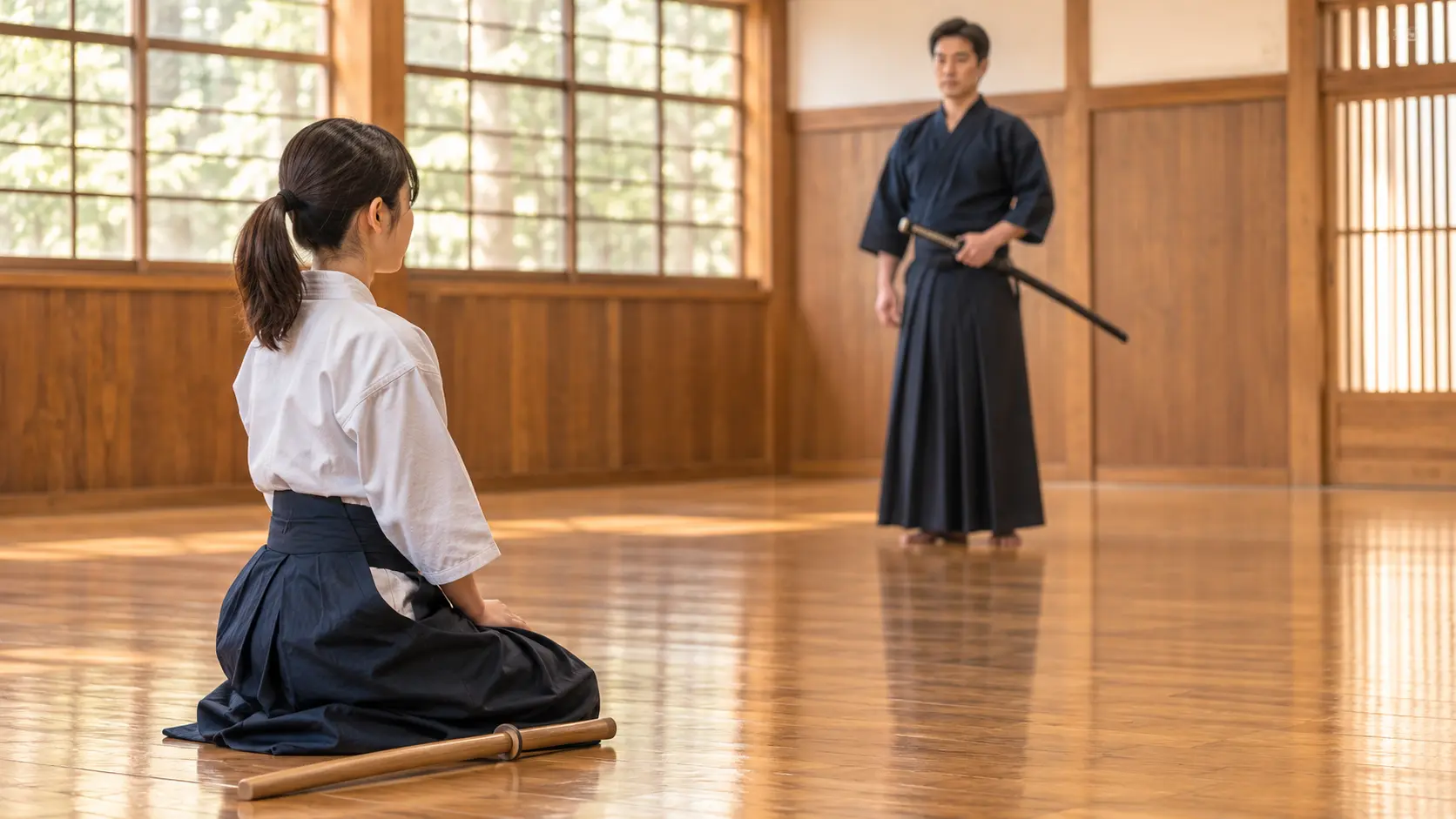
Before class. Arrive early. Dojos care about punctuality, and arriving early gives you time to change, meet the instructor, and observe the room. Expect to remove your shoes at the training space.
The bow. Classes usually begin and end with a formal bow. It is not religious. It is a way of showing respect to the instructor, your training partners, and the space.
Warm-up and posture. You will likely begin with light stretching and a focus on stance: how you stand, how you sit (often in seiza, the kneeling posture), and how you breathe. For beginners, posture is the foundation of everything else.
Basic movements. Many schools introduce the core sequence slowly: how to hold the scabbard, how to grip, how to draw, how to cut, and how to re-sheathe. Many dojos start newcomers with a wooden bokken so they can learn the movement safely first. Don’t expect to learn a full form in one session. Expect to repeat small things many times.
Feedback. Good instructors correct a little at a time. If you are corrected often, that is normal. It means someone is paying attention to your progress.
What Should You Wear and Bring?
- Clothing: Loose, comfortable clothing that lets you move freely is usually fine for a first class. Traditional uniforms (keikogi and hakama) tend to come later, once you decide to continue. Ask the dojo what they recommend.
- Sword: Do not rush to buy one. Many dojos introduce students to a bokken or loaner equipment first, but policies vary, so ask. Buying an expensive sword online before you understand sizing, balance, and safety is one of the most common beginner regrets.
- Water and a small towel: Training is calm, but you will still work up a sweat.
- Open mind: The most useful thing a beginner can carry is a willingness to move slowly.
Costs vary widely between schools, and prices change, so check directly with any dojo you are considering rather than relying on an old listing or blog post.
How to Choose Among the Best Martial Arts Schools NYC for Iaido
Search for the best martial arts schools NYC and you will see long lists. The trouble is that “best” depends entirely on what you need. A school that is perfect for a competitive young athlete may be wrong for a 40-year-old beginner who wants calm, technical training. Use these criteria instead of star ratings alone.
- Instructor credibility and lineage. Ask who teaches, how long they have trained, and what tradition they follow. A good instructor answers openly and without pressure.
- A real beginner path. Look for a dojo that welcomes newcomers rather than only advanced students. Ask how new students are introduced.
- Safety culture. Swords, even practice swords, demand care. Watch how students handle equipment. You want clear rules, calm supervision, and a focus on safe distance.
- Etiquette without intimidation. Formality is part of budo, but a school should feel respectful, not cold.
- Transparent information. Schedules, location, and contact details should be easy to find. If a dojo’s online information conflicts with itself, call and confirm before traveling.
- A trial option. A free or low-pressure trial class lets you judge the atmosphere before committing. Always ask whether one is available.
- Convenience. The best dojo is one you will actually reach after work in winter. Distance matters more than most people admit.
Where Queens Fits In
If you live in Queens, you do not have to cross the East River for serious training. Searching for martial arts Queens NY brings up several options, and Genyukan Dojo, at 63-44 Saunders St in Rego Park, is one local school that teaches traditional Japanese martial arts, including Iaido and Shotokan Karate, under Sensei Roman Pinkhasov. The dojo offers a free trial class, which is a sensible way to see whether the atmosphere suits you. Confirm the current schedule directly with the dojo before you visit, since online listings sometimes differ.
If you are comparing more than one school, visit each in person if you can. Ten minutes in the room usually tells you more than ten reviews.
Iaido and Shotokan Karate New York City: How the Two Arts Complement Each Other
A common question from newcomers is whether to choose Iaido or karate. You do not have to treat it as either-or, and the two arts balance each other well.
Shotokan karate is a striking art, known for strong stances, linear technique, and disciplined repetition of basics (kihon), forms (kata), and partner practice. If you are researching Shotokan Karate New York City, you will find it is a dynamic, physically energetic style that builds conditioning, coordination, and confidence.
Iaido moves differently. It is quieter, more deliberate, and centered on a single tool, the sword. It rewards slowness, precision, and composure.
| Shotokan Karate | Iaido | |
|---|---|---|
| Training style | Basics, forms, and partner drills | Mostly solo forms (kata) |
| Pace | Energetic and dynamic | Slow, deliberate, exact |
| Equipment | Uniform (gi) | Practice sword, often a uniform with hakama |
| Main benefit | Conditioning, coordination, striking skill | Focus, posture, composure |
What they share matters more than what separates them. Both teach etiquette, respect for the instructor, patience with repetition, and the idea that technique is refined over years. Many students find that karate builds their energy and Iaido calms and focuses it. If a school offers both, as Genyukan Dojo does, you can experience each and see which one pulls you in.
Which should you start with? If you want a more athletic, social workout, begin with karate. If you want something meditative and technical, begin with Iaido. If you are unsure, try both through a trial class.
Iaido New York Beginner Tips and Common Mistakes
Practical Tips for a Strong Start
- Observe first. If a dojo allows it, watch a class before joining. You will quickly see the pace and the teaching style.
- Ask questions before buying anything. Gear choices are easier once you know what the school expects.
- Go slowly on purpose. Speed comes from accuracy, not the other way around.
- Practice posture daily. Even five minutes of standing and breathing correctly helps your class work.
- Take notes after class. A few lines about what the instructor corrected will help you remember.
- Be consistent. Two regular classes a month will teach you more than one intense burst followed by a long gap.
- Respect the blade. Treat every sword, including a practice sword, as a serious tool. Follow safety instructions exactly.
- Learn the etiquette. Bowing, seating, and equipment handling are part of the art, not extras.
Common Mistakes to Avoid
- Buying a sword too early. Wait until your instructor guides you on size, type, and care.
- Expecting instant results. Iaido looks simple and is not. Even basic movements take months to feel natural.
- Copying videos at home. Watching clips can inspire you, but practicing alone without feedback can lock in errors, and handling a sword without supervision is a safety risk.
- Chasing speed. Rushing the draw is the classic beginner habit. It makes technique sloppy and unsafe.
- Ignoring posture and breathing. Many students focus on the arms and forget the hips, feet, and breath that power the movement.
- Judging a school by a flashy website. Clear communication, a calm room, and a good teacher matter more than polished marketing.
- Quitting after a tough first class. Feeling clumsy is normal. Everyone starts there.
Frequently Asked Questions About Iaido New York
What is Iaido in simple words?
Iaido is a Japanese martial art centered on drawing a sword, cutting, and returning it to the scabbard with precision, calm, and awareness. It is practiced mostly as solo forms rather than sparring.
Do I need experience to start Iaido in New York?
No. Reputable dojos welcome complete beginners. You learn posture, etiquette, and the basic movements step by step.
Do I need to buy a sword before my first class?
Usually not. Many dojos begin newcomers with a wooden bokken or loaner equipment, but policies differ, so ask the dojo directly before buying anything.
Is Iaido dangerous?
Any sword practice carries some risk, which is why safety and supervision matter. In a well-run dojo, you train with controlled movements, clear rules, and close instruction. Choose a school that takes safety seriously and follow its guidance exactly.
Is Iaido good for stress and focus?
Many practitioners describe it as a moving meditation, because the slow, exact movements demand your full attention. Results vary by person, and it is not a substitute for medical or mental health care.
How is Iaido different from Shotokan karate?
Karate focuses on striking, stances, and partner practice, while Iaido focuses on sword handling through solo forms. Karate is typically more energetic; Iaido is more meditative and precise.
Can adults start martial arts later in life?
Yes. Iaido in particular rewards patience and technique over raw athleticism, so adults often take to it well. Discuss any health concerns with your doctor and the instructor before starting.
How do I find martial arts in Queens?
Search for martial arts Queens NY, then compare schools by instructor, beginner path, safety culture, and trial options. Genyukan Dojo in Rego Park offers Iaido and Shotokan Karate and has a free trial class. Contact the dojo to confirm the current schedule.
How long does it take to get good at Iaido?
Iaido is a long-term craft. You will feel more comfortable within weeks of regular practice, but real refinement takes years. Focus on steady progress rather than a finish line.
Start Your Iaido New York Journey
Starting Iaido New York training is less intimidating than it looks. You do not need a sword, a martial arts background, or perfect fitness. You need curiosity, patience, and a dojo that teaches carefully and welcomes beginners. Compare schools using clear criteria rather than hype, remember that the best martial arts school is the one that suits you, and try a class before committing.
If you live in Queens, Genyukan Dojo in Rego Park offers a practical place to begin, with Iaido and Shotokan Karate taught under one roof. Book a free trial class, ask your questions, and see how the first bow feels. That single step is the hardest part of Iaido, and the rest is practice.