Finding the right martial arts school is about more than learning punches, kicks, or self-defense techniques. It is about discovering an environment where students can develop confidence, discipline, coordination, respect, and a lifelong appreciation for learning.
For families and individuals living in Queens, finding quality Martial Arts Classes Near Rego Park can be an excellent opportunity to explore traditional Japanese martial arts close to home.
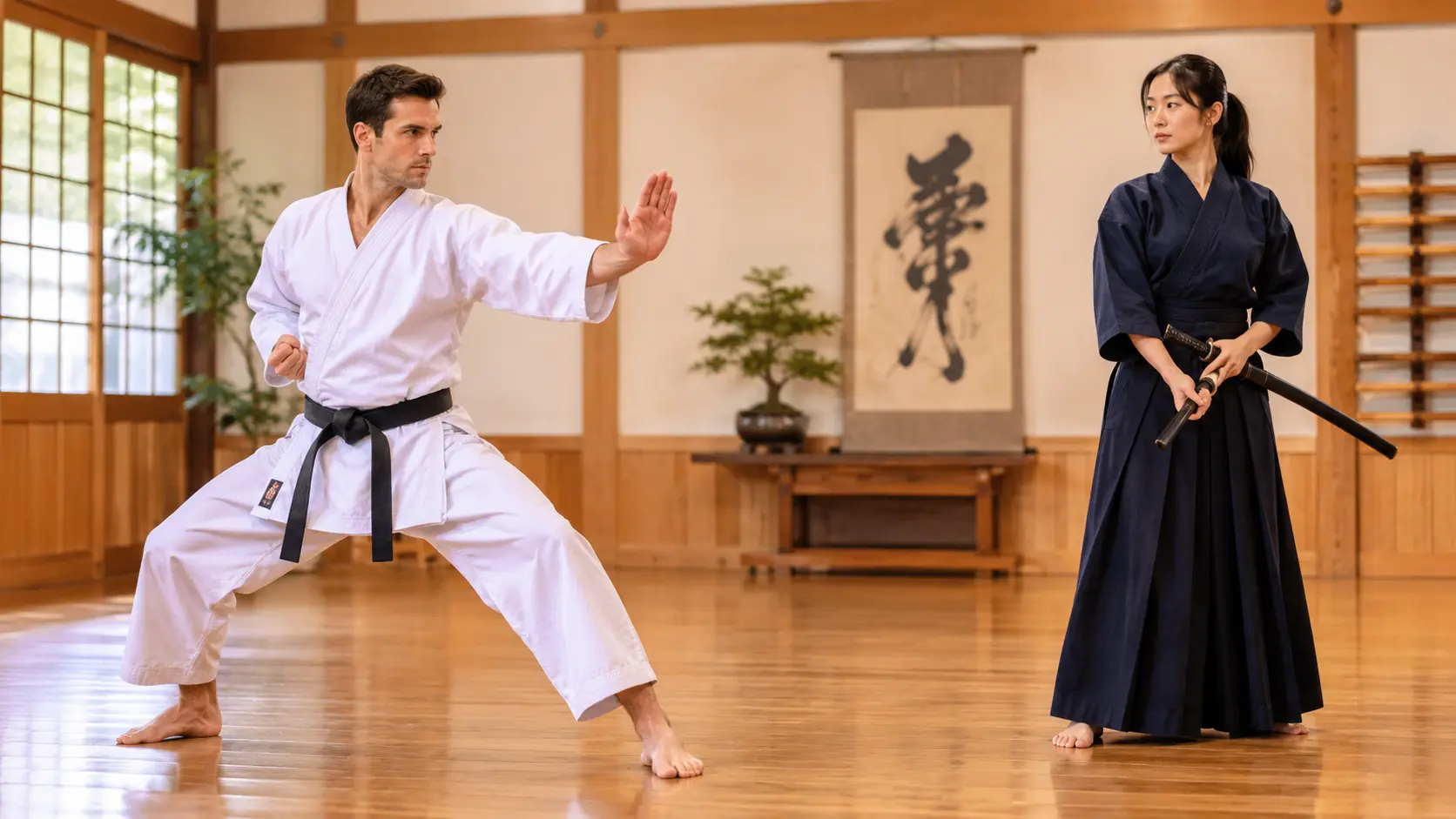
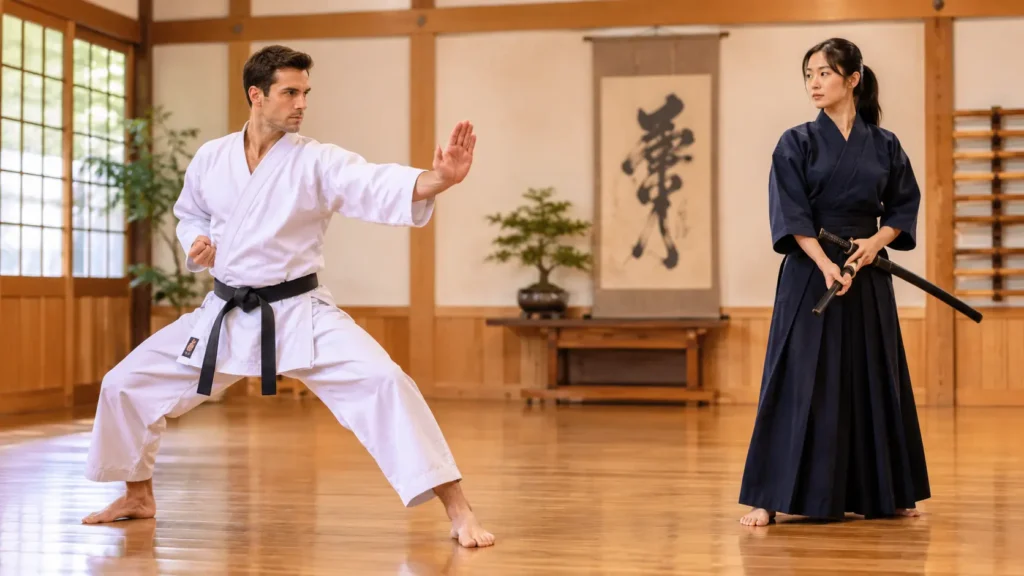
However, not every martial art offers the same training experience. Some focus on empty-hand techniques, while others explore traditional weapons, precise movements, and the cultural principles behind Japanese swordsmanship.
At Genyukan Dojo, students have the opportunity to explore two traditional Japanese martial arts: Shotokan Karate-do and Ryushin Shouchi Ryu Iaido. Under the leadership of Roman Pinkhasov Sensei, the dojo provides instruction for children and adults interested in developing their physical and mental abilities through traditional martial arts practice.
Whether you are a parent searching for a meaningful activity for your child, an adult interested in traditional Karate, or someone fascinated by Japanese swordsmanship, understanding these disciplines can help you make a confident decision.
In this guide, we will explore the differences between Karate and Iaido, the value of traditional training, what beginners should expect, and how to find a martial arts program that fits your goals.
1. Why Are Martial Arts Classes Near Rego Park Worth Exploring?
Rego Park is a Queens neighborhood where families, students, and working professionals have different interests and lifestyles. Finding an activity that supports physical development while encouraging positive personal habits can be valuable for people of different ages.
Traditional martial arts offer a structured way to learn new physical skills while practicing concentration, patience, and self-control.
Unlike activities that focus exclusively on exercise, martial arts training combines physical movement with technical learning and traditional etiquette.
Students gradually become familiar with instructions, practice routines, and the importance of treating instructors and fellow students respectfully.
Some important benefits of traditional martial arts training include:
- Physical coordination: Students practice movements that develop balance, body awareness, and coordination.
- Discipline: Following instructions and maintaining regular practice encourages responsibility.
- Concentration: Learning techniques and remembering kata sequences requires attention.
- Confidence: Developing new skills can help students become more comfortable with challenges.
- Respect: Traditional dojo etiquette encourages consideration for instructors and training partners.
- Personal development: Regular practice provides opportunities to learn patience and perseverance.
These qualities are developed gradually. They are not automatic results of joining a class, but consistent instruction and practice can help students work toward them.
When researching Martial Arts Classes Near Rego Park, consider the teaching environment as carefully as the martial art itself.
A good dojo should provide clear instruction, appropriate supervision, a welcoming atmosphere, and a structured learning process.
2. Discover Shotokan Karate New York City Students Can Explore
Shotokan Karate is one of the most recognized traditional Japanese karate styles. Its development is closely associated with Gichin Funakoshi, who helped introduce karate from Okinawa to mainland Japan.
Shotokan training emphasizes fundamental techniques, controlled movements, strong stances, and the development of physical and mental discipline.
Students generally study three major components of Karate.
Kihon: Learning the Fundamentals
Kihon means basic techniques. It includes punches, blocks, kicks, stances, and footwork.
Beginners spend considerable time practicing these movements because proper fundamentals provide the foundation for more advanced techniques.
Students gradually learn how to coordinate their movements, maintain balance, and perform techniques with better control.
Kata: Understanding Traditional Forms
Kata consists of predetermined sequences of movements that represent different techniques and applications.
Students practice these sequences to improve coordination, timing, posture, concentration, and technical accuracy.
Learning kata also introduces students to the traditional structure and history of Karate.
Kumite: Practicing With a Partner
Kumite refers to partner-based training and sparring exercises.
Depending on the student’s experience and the instructor’s curriculum, practice may begin with controlled exercises before progressing to more advanced training.
Proper supervision, appropriate protective equipment, and respect for training partners are essential.
Is Shotokan Karate Suitable for Beginners?
Yes. Beginners can start learning Shotokan Karate without previous martial arts experience.
Children may enjoy the structured movements and opportunity to learn new skills. Teenagers can work on coordination and confidence, while adults can explore traditional Karate as a way to stay active and challenge themselves.
Genyukan Dojo offers traditional Shotokan Karate-do instruction in Rego Park, Queens.
If you want to learn more about the program, visit our Shotokan Karate classes page.
3. Explore Iaido New York and the Art of Japanese Swordsmanship
While Karate focuses primarily on empty-hand techniques, Iaido introduces students to traditional Japanese swordsmanship.
Iaido is a Japanese martial art centered on drawing and handling the sword through carefully practiced movements and predetermined forms.
Its training emphasizes precision, posture, timing, concentration, and awareness.
Unlike many partner-based martial arts, much of Iaido practice involves individual kata. Students repeat specific movements while learning how different parts of each technique connect.
What Do Students Learn in Iaido?
Traditional Iaido movements involve several important elements.
- Nukitsuke: The initial drawing movement within a kata.
- Kiritsuke: The prescribed cutting movement.
- Chiburi: A traditional movement associated with removing blood from the blade.
- Noto: Returning the sword to its scabbard.
These movements require attention to detail and consistent practice.
Students must learn to coordinate their hands, body positioning, posture, and movement while following the principles of their particular swordsmanship tradition.
Iaido is not simply about learning to use a sword. It is a traditional discipline in which technical precision and mental concentration are closely connected.
The All Japan Kendo Federation explains that Iaido developed from Japanese sword methods and emphasizes training the mind and body through an appreciation of movement and stillness.
For further educational information, see the All Japan Kendo Federation’s explanation of Iaido.
What Is Ryushin Shouchi Ryu?
Genyukan Dojo teaches Ryushin Shouchi Ryu Iaido, a traditional Japanese swordsmanship school.
This discipline includes predetermined sword forms and specialized training methods passed down through its tradition.
Students gradually become familiar with the school’s movements, technical principles, and training etiquette.
Beginners should always follow their instructor’s guidance regarding appropriate practice equipment. Advanced equipment and sharp swords are not suitable for unsupervised beginner practice.
If traditional Japanese swordsmanship interests you, explore our Iaido training program in Queens.
4. Karate vs. Iaido: Which Traditional Martial Art Should You Choose?
People searching for martial arts instruction sometimes have difficulty deciding between different disciplines.
Shotokan Karate and Iaido both belong to the Japanese martial arts tradition, but their training methods and physical movements are different.
Understanding their differences can make choosing a program easier.
| Training aspect | Shotokan Karate | Iaido |
|---|---|---|
| Main focus | Empty-hand techniques | Japanese swordsmanship |
| Basic training | Punches, kicks, blocks, stances | Sword handling and basic movements |
| Forms | Karate kata | Sword kata |
| Training style | Individual and partner exercises | Primarily individual forms |
| Physical emphasis | Coordination, movement, balance | Precision, posture, coordination |
| Mental emphasis | Discipline and control | Concentration and awareness |
Who Should Consider Karate?
Shotokan Karate may be suitable for people who enjoy physical movement, traditional empty-hand techniques, and structured partner exercises.
It can be an interesting option for children, teenagers, and adults who want to explore traditional martial arts while developing physical skills.
Who Should Consider Iaido?
Iaido may appeal to individuals interested in Japanese history, traditional swordsmanship, and detailed technical practice.
People who enjoy learning precise movements and repeating structured forms may find this discipline particularly interesting.
Can Someone Study Both?
Students interested in both disciplines can ask the instructor about available training opportunities and appropriate class arrangements.
Karate and Iaido offer different learning experiences, and studying them can provide a broader understanding of traditional Japanese martial arts.
The best choice ultimately depends on your interests, experience, personal goals, and the training schedule that works for you.
5. What Should Beginners Expect From Their First Martial Arts Class?
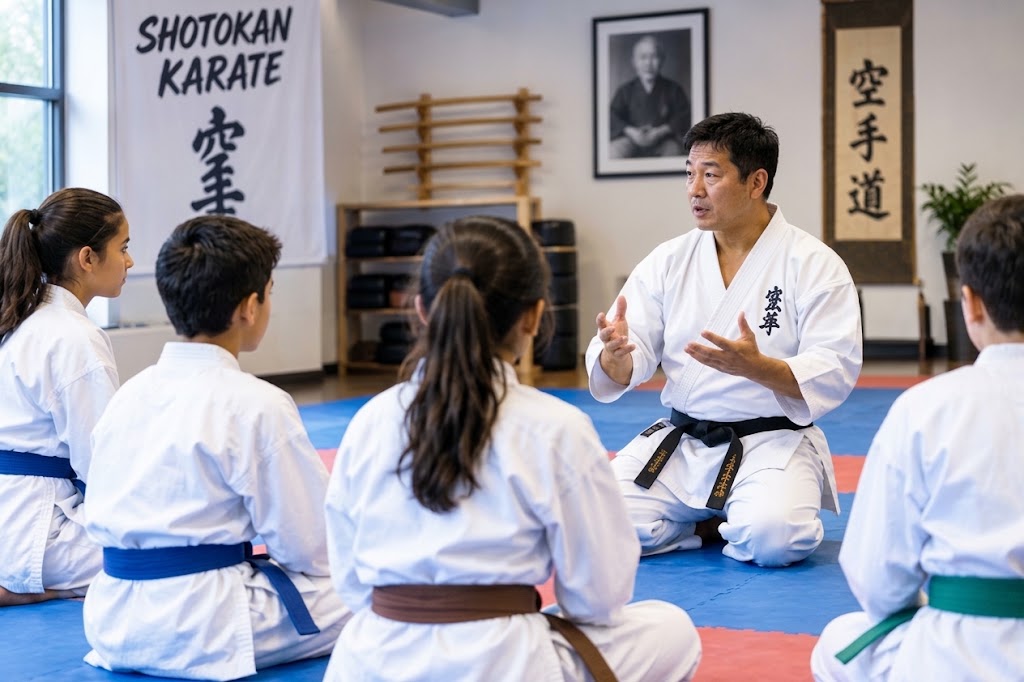
Starting martial arts for the first time can feel intimidating.
Some beginners worry about their physical fitness, coordination, age, or ability to remember techniques.
However, you do not need to be an experienced athlete to begin learning.
A suitable beginner program should introduce fundamental skills gradually and provide clear explanations.
Here are some things you may experience during an introductory class.
Introduction to the Dojo
Your instructor may explain basic dojo etiquette, class organization, and the expectations for students.
You can also learn about the training style and ask questions about the program.
Warm-Up and Preparation
Classes may begin with stretching, light movement, and physical preparation.
The activities should be appropriate for the students’ ages and experience levels.
Learning Basic Movements
In Karate, beginners may start with basic stances, punches, blocks, and simple movements.
In Iaido, students begin learning introductory principles and appropriate sword-handling movements under supervision.
Practice and Instructor Feedback
Repetition is an important part of traditional martial arts.
Your instructor may demonstrate a movement, explain the details, and help you correct mistakes.
Do not expect to master every technique immediately. Developing good fundamentals takes time.
Understanding Your Progress
As you continue attending classes, you will gradually become more familiar with the training structure and techniques.
Your instructor can explain how progress is evaluated and what skills you should focus on next.
What Should You Bring?
For your first visit, comfortable athletic clothing and a water bottle are generally sensible choices.
You should contact the dojo before purchasing specialized equipment.
Genyukan Dojo also provides information about beginner participation and equipment in its Frequently Asked Questions section.
6. How to Choose the Right Martial Arts School in Rego Park
Choosing a martial arts school is an important decision, particularly when you are planning to attend regularly or enroll your child.
Before joining, consider the following factors.
Instructor Experience
Look for an instructor with a suitable background in the martial art being taught.
Ask about their experience, qualifications, teaching approach, and connection to the tradition.
Beginner-Friendly Instruction
New students should have an opportunity to learn basic techniques without feeling pressured to perform advanced movements.
A structured introduction makes it easier to understand the learning process.
Class Schedule
Convenient class times can make regular attendance easier.
Check whether the available sessions fit your work, school, or family commitments.
Safety and Supervision
Ask how the dojo handles warm-ups, partner exercises, equipment, and age-appropriate training.
Students should understand the importance of following instructions and respecting training partners.
Training Environment
A positive dojo environment should encourage respect, patience, and continuous improvement.
Observe how instructors communicate with students and how students interact with one another.
Why Explore Genyukan Dojo?
Genyukan Dojo is located at:
63-44 Saunders Street, Rego Park, NY 11374.
The dojo offers two traditional Japanese martial arts:
- Shotokan Karate-do
- Ryushin Shouchi Ryu Iaido
Instruction is provided under the leadership of Roman Pinkhasov Sensei.
The school’s mission is to help students improve their bodies, minds, and spirits through traditional martial arts practice.
Genyukan’s programs are intended for students across different age groups and ability levels.
You can explore the Genyukan class schedule to learn about the available training sessions.
For more information about the school’s background and instructor, visit the About Genyukan Dojo page.
7. Common Beginner Mistakes and Practical Tips for Better Training
Every martial artist starts as a beginner. Making mistakes is part of the learning process, but developing good habits early can make training more productive.
Here are some common mistakes and ways to avoid them.
Mistake 1: Expecting Immediate Results
Learning martial arts requires patience. Basic movements may take weeks or months to understand properly.
Practical tip: Focus on improving one technique at a time rather than rushing toward advanced skills.
Mistake 2: Ignoring Fundamentals
Students sometimes become interested in advanced kicks, complicated kata, or impressive sword techniques before developing the necessary basics.
Practical tip: Give proper attention to stances, posture, balance, and fundamental movements.
Mistake 3: Comparing Your Progress With Other Students
Everyone learns differently. Previous experience, physical condition, age, and training consistency can affect individual progress.
Practical tip: Compare your current skills with your own earlier performance.
Mistake 4: Training Without Proper Recovery
Pushing yourself too hard can make training uncomfortable and increase the risk of injury.
Practical tip: Follow your instructor’s recommendations, rest when necessary, and communicate about pain or physical limitations.
Mistake 5: Forgetting Martial Arts Etiquette
Traditional martial arts emphasize respect for instructors, fellow students, and the dojo environment.
Practical tip: Arrive on time, listen carefully, maintain appropriate training behavior, and follow dojo rules.
Mistake 6: Focusing Only on Belt Promotions
Rank advancement can be motivating, but it should not become the only purpose of training.
Practical tip: Concentrate on understanding techniques and developing consistent practice habits.
The most important part of martial arts development is the willingness to continue learning.
Frequently Asked Questions About Martial Arts Classes Near Rego Park
1. Where can I find Martial Arts Classes Near Rego Park, Queens?
Genyukan Dojo offers traditional Shotokan Karate-do and Ryushin Shouchi Ryu Iaido at 63-44 Saunders Street, Rego Park, NY 11374. Visit the official website to learn about available programs and contact the dojo.
2. Can beginners join Shotokan Karate classes?
Yes. Beginners can start learning Shotokan Karate without previous martial arts experience. Training introduces fundamental techniques and gradually develops students’ understanding of kata, movement, and partner exercises.
3. Is Shotokan Karate suitable for adults?
Yes. Adults can study traditional Shotokan Karate and work on developing their coordination, technique, physical skills, and discipline. Beginners should choose instruction appropriate for their experience and physical condition.
4. What is the difference between Karate and Iaido?
Karate focuses mainly on empty-hand techniques such as punches, kicks, and blocks. Iaido focuses on traditional Japanese swordsmanship through carefully practiced forms and movements.
5. Do I need experience before starting Iaido?
No previous experience is necessarily required. Beginners can learn introductory movements and sword-handling principles under appropriate instruction and supervision.
6. How often should beginners attend martial arts classes?
Training frequency depends on individual goals, schedule, and physical condition. Regular attendance is generally more useful than inconsistent training. Your instructor can recommend a suitable routine.
7. What should I wear to my first class?
Comfortable athletic clothing is a practical starting point for an introductory visit. Ask the dojo about uniform requirements and specialized equipment before making a purchase.
8. Can children learn traditional Japanese martial arts?
Yes. Children can learn age-appropriate martial arts techniques and practice following instructions, coordination, respect, and discipline. The appropriate class depends on the child’s age and readiness.
9. How do I check the Genyukan Dojo class schedule?
Visit the official Genyukan class schedule page for information about training sessions.
10. How can I contact Genyukan Dojo?
You can visit https://www.genyukandojo.com/ to explore the school’s programs and contact information. The dojo is located at 63-44 Saunders Street, Rego Park, NY 11374.
Conclusion: Begin Your Journey With Martial Arts Classes Near Rego Park
Traditional martial arts provide an opportunity to develop physical skills while learning valuable principles such as patience, respect, discipline, and concentration.
Shotokan Karate introduces students to traditional empty-hand techniques, kata, and partner training. Iaido offers a different experience through Japanese swordsmanship, precision, and carefully practiced forms.
Both disciplines require consistent effort and a willingness to learn.
If you are exploring Martial Arts Classes Near Rego Park, Genyukan Dojo offers an opportunity to discover traditional Japanese martial arts in Queens.
With Shotokan Karate-do and Ryushin Shouchi Ryu Iaido instruction under Roman Pinkhasov Sensei, the dojo welcomes people interested in developing their skills through structured martial arts practice.
Whether you are considering your first Karate class, exploring traditional swordsmanship, or looking for a meaningful activity for your family, the best place to begin is by learning more about the available programs.
Visit Genyukan Dojo’s official website to explore the classes, check the schedule, and contact the dojo about getting started.
Your martial arts journey does not require previous experience. It begins with curiosity, commitment, and the willingness to take the first step.